Top 5 Key Benefits of Surface Grinding Machine?
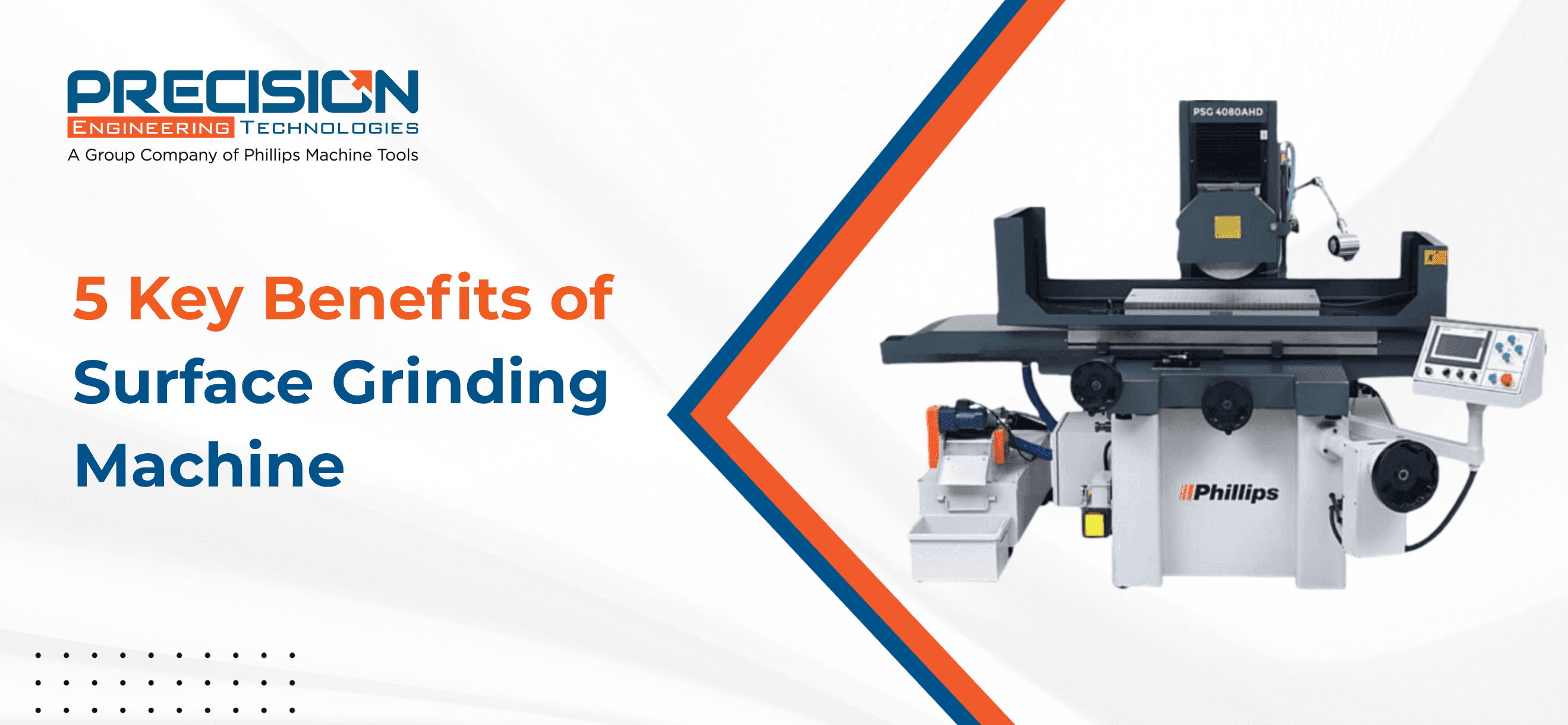
While CNC mills and lathes often dominate the spotlight in machining operations, the surface grinding machine remains an unsung hero in achieving ultra-fine finishes and micron-level tolerances.
In industries such as aerospace, homeland security, tool and die, automotive and medical, where part flatness and edge definition are critical, surface grinding offers a level of precision unmatched by other subtractive processes.
Table of Content:
Whether you are preparing hardened dies or finishing critical surfaces for mating assemblies, the benefits of surface grinding directly impact the final product's functionality, durability and aesthetic. This guide explores how surface grinding works, its distinct advantages and niche applications.
What is a Surface Grinding Machine?
A surface grinding machine is a precision tool that uses an abrasive wheel to remove material from the surface of a workpiece. The goal is to achieve a flat, smooth surface and maintain dimensional consistency across tight tolerances.
The workpiece is typically held on a magnetic chuck or a mechanical fixture, while the grinding wheel moves over the surface at high speeds.
Surface grinders can be manually operated or fully automated using CNC systems, making them suitable for both low-volume precision jobs and high-volume production. Modern machines come equipped with high-speed spindles, programmable table movements, coolant management systems and auto-feed features to optimize consistency and throughput.
What is the main purpose of surface grinding?
In many manufacturing environments, surface grinding is the final finishing operation. It is often the only process capable of meeting ultra-precise flatness, parallelism and surface finish requirements. Components such as gauge blocks, mould inserts, press dies and surgical blades require fine-tuned surface preparation that only a grinding wheel can provide.
Upgrades in digital controls, automated dressing systems and vibration reduction mechanisms have further enhanced grinding accuracy and cycle speed. As a result, grinding machines have become essential in production lines that demand high repeatability and zero-defect tolerance.
5 Key Benefits of Surface Grinding Machines
Ultimate Precision for High-Tolerance Parts
With tolerance capabilities as tight as ±0.001 mm and flatness within microns, the surface grinding machine is indispensable for producing components that must adhere to strict geometrical and functional requirements.
This is especially important in industries where part interaction and mechanical consistency determine performance outcomes. For example:
- Gauge blocks and calibration tools require flawless flatness to ensure accurate referencing.
- Mating surfaces in mechanical assemblies demand exactness to avoid vibration, leakage, or misalignment.
- Punch dies and extrusion inserts in the tool and die industries need absolute dimensional control to maintain consistent part output across long production cycles.
This level of control not only ensures operational stability but also improves the interchangeability and modularity of precision parts.
Superior Surface Finish Quality
Surface grinders are engineered to create finishes that meet both functional and aesthetic demands. Capable of achieving surface roughness as low as Ra 0.1 µm, they are ideal for:
- Optical tools and mirror-polished bases where light reflection or transmission is critical
- Mould cavities used in injection moulding where smooth walls affect part release and product quality
- Sealing surfaces and sliding parts where reduced friction enhances performance and extends service life
A smooth finish also means less susceptibility to corrosion, microcracking, and wear, making surface grinding an essential post-machining step for high-performance parts.
Increased Efficiency and Faster Production
Today’s surface grinding machines are built for both precision and productivity. Integrated features such as digital infeed controls, programmable feed rates, automatic wheel dressing and coolant systems significantly reduce manual intervention. The result:
- Shorter setup times for repetitive part production
- Consistent quality over extended production runs
- Reduced downtime due to tool wear or operator fatigue
This allows manufacturers to optimize cycle time without compromising on finish or dimensional accuracy.
Versatility in Material Types
One of the underrated benefits of surface grinding is its broad material compatibility. These machines can handle:
- Tool steels like D2, A2, and H13
- Hard carbides and ceramics used in wear-resistant tooling
- Non-ferrous metals such as aluminum, copper and brass
- Composite and glass substrates required in electronics and optical industries
This versatility allows companies to meet multi-material demands with a single machine platform, reducing operational complexity and floor space usage.
Cost-Effectiveness in the Long Run
Despite a relatively higher initial investment, surface grinders offer significant long-term financial benefits:
- Fewer rejected parts due to high consistency and repeatability
- Lower tooling costs because of minimal wheel degradation
- Reduced dependency on secondary finishing operations, saving time and labor
- Minimized operator errors through automation and digital control systems
These cost efficiencies compound over time, particularly in precision-critical and high-volume environments such as aerospace, automotive and homeland security.
Uncommon Applications of Surface Grinding Machines
- Semiconductor Industry: Used to achieve sub-micron flatness in wafer polishing and microchip assembly bases.
- Medical Device Manufacturing: Essential for finishing implant surfaces and achieving friction-free surgical tool geometries.
- Mould and Die Finishing: Final precision for mould cores and cavities, especially in pressure casting and plastic moulding.
- Optical and Glasswork: Used for grinding flat lenses, mirrors, display glass and other optically critical components.
Conclusion
The surface grinding machine is a critical asset in the precision engineering ecosystem. From achieving dimensional tolerances of a few microns to producing cosmetic-quality surface finishes, its impact is direct and measurable.
Whether used for hardened dies, medical instruments or wafer-level polishing, the benefits of surface grinding improve production quality, reduce downstream costs and enable manufacturers to meet the toughest industry standards.
At PETECH, we offer a suite of high-performance surface grinding solutions tailored to industry-specific challenges. Our machines and expertise help manufacturers optimize precision, minimize downtime and achieve repeatable quality.
Talk to us today to explore how surface grinding can elevate your manufacturing outcomes.
"FAQ" for Surface Grinding Machines:
Related Blogs
Tool and Cutter Grinding: A Deep Dive into Precision Sharpening Technologies
Tool performance directly influences the efficiency, accuracy and overall quality of end products in precision manufacturing. As tools wear down, their effectiveness diminishes, leading to poor finishes, dimensional inaccuracies and increased scrap.