How to Choose the Right CNC Machine for Complex Metal Parts
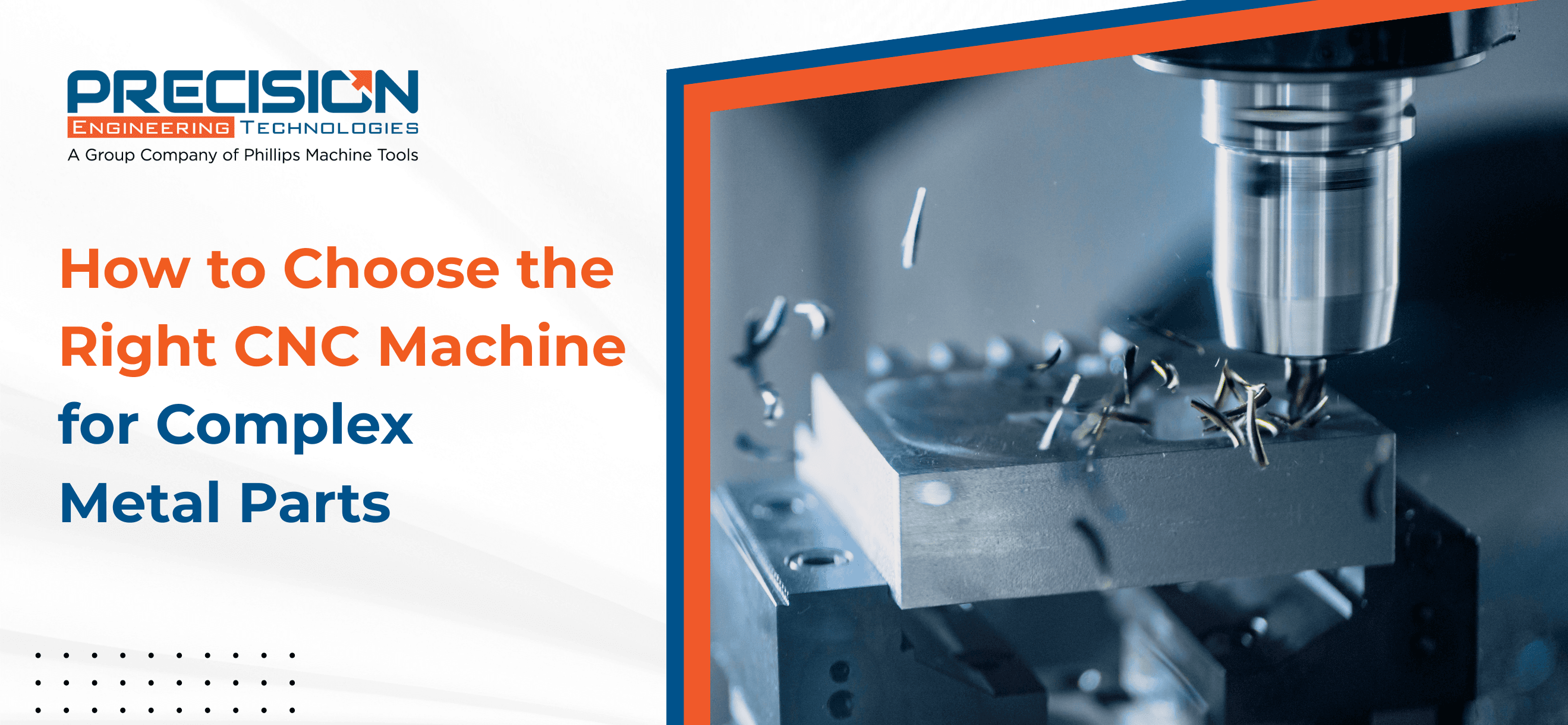
In the fast-paced world of metal manufacturing, where every micron matters and deadlines are non-negotiable, choosing the right CNC machine for metal can be the difference between delivering flawless components and incurring costly delays.
Table of Content:
- Why the Right CNC Machine for Metal Matters
- Types of CNC Machines for Metal Parts
- Factors to Consider When Choosing a CNC Machine
- Advanced CNC Technologies for Metal Machining
- Conclusion
Producing complex metal parts isn’t just about having advanced machinery, it’s about aligning the right equipment with your material properties, design intricacies and production goals.
This guide simplifies the decision-making process by walking you through various types of CNC machines operation and the critical factors to consider while choosing the right solution for your manufacturing needs.
Why the Right CNC Machine for Metal Matters
Selecting the right CNC machine for complex operation directly impacts product quality, cycle time and overall operational efficiency. An ill-suited machine can lead to:
- Tolerance deviations and poor surface finish
- Increased scrap and material wastage
- Higher tooling costs
- Downtime due to wear or incompatibility
- Delayed deliveries and increased rework
By contrast, the right machine ensures you maximize ROI through accuracy, reliability and optimal throughput. With growing demand for high-mix, low-volume parts and complex geometries in sectors like automotive, aerospace, energy and medical, your CNC setup must be tailored, not generic.
Types of CNC Machines for Metal Parts
Understanding the capabilities of each CNC machine operation helps match your part’s complexity with the most effective machining method.
CNC Milling Machines
These machines use multi-axis rotary cutters to remove material and produce complex 3D shapes. Ideal for prismatic components like engine blocks, mould cavities, or housings, CNC mills offer:
- Up to 5-axis simultaneous motion
- High-speed spindles
- Advanced surface finishing capabilities
Applications: Turbine blades, control housing, manifolds and medical implants.
CNC Lathes and Turning Center
CNC lathes rotate a cylindrical workpiece against a cutting tool to create symmetrical shapes. Perfect for producing shafts, bushings, and threaded parts.
- Excellent for high-volume runs
- Can be combined with live tooling for light milling and drilling
- Quick setup and rapid cycle times
Applications: Axles, camshafts, fasteners and connectors.
CNC Wire EDM Machines
Wire Electrical Discharge Machining uses a continuously fed wire to erode material using electrical discharges. It’s ideal for intricate profiles and internal cuts in hardened metals.
- High precision (up to ±0.002 mm)
- No mechanical stress or burr formation
- Suitable for tool steels, Inconel and titanium
Applications: Dies, extrusion tools, precision inserts, surgical tools.
CNC Grinding Machines
For achieving ultra-fine surface finishes and tight tolerances, CNC grinders use abrasive wheels to refine the part post-machining.
- Suitable for hardened or coated surfaces
- Ensure dimensional stability and fine finishes
- Necessary for aerospace and medical tolerances
Applications: Bearing races, valve seats, hydraulic parts.
Factors to Consider When Choosing a CNC Machine
Part Complexity and Design Geometry
If your parts include undercuts, compound curves or deep cavities, a 5-axis CNC mill or hybrid machine like a mill-turn center will provide the flexibility needed. For simple round parts, a 2-axis lathe might suffice.
Tolerance and Surface Finish Requirements
Applications like surgical implants or aerospace fittings demand surface finishes in the 0.1–0.4 µm Ra range and tight tolerances. In such cases:
● Opt for machines with high spindle speeds (12,000–30,000 RPM)
● Use machines with closed-loop feedback systems and thermal compensation
● Consider secondary finishing with CNC grinding or honing
Production Volume and Batch Size
High-volume production requires:
- Automated tool changers
- Pallet changers or robot loaders
- Integration with ERP or MES systems
For prototyping or custom jobs, opt for machines with quick setups and intuitive control systems.
Software and Control System Capabilities
A modern CNC machine should integrate seamlessly with CAD/CAM platforms and allow:
● Real-time monitoring and error detection
● Adaptive machining paths
● Predictive maintenance
Choose systems compatible with your design software and scalable to future automation.
Tooling and Spindle Configurations
The right tooling interface (BT, HSK, Capto) and spindle capacity (torque, RPM) are essential. High-speed spindles benefit aluminum and composites, while high-torque spindles are needed for stainless steel and cast iron.
Advanced CNC Technologies for Metal Machining
Hybrid Machining Centers
Some advanced setups now combine turning and milling in a single machine, such as Vertical Turn Mills, to reduce setups and enhance throughput.
Automation Integration
Modern CNC machines support:
● Robotic arm loading/unloading
● Conveyor belt part transfer
● Tool life management systems
These features reduce manual labor, enhance safety and improve consistency.
Industry 4.0 and Smart Monitoring
Cloud-connected machines enable:
● Data-driven decision making
● Real-time performance metrics
● Remote diagnostics
Predictive analytics help prevent unplanned downtime.
Conclusion
Choosing the right CNC machine for metal components is a strategic decision that influences every aspect of your manufacturing, from dimensional accuracy to delivery timelines. Whether you need ultra-precise holes, complex contours or high-volume symmetry, there’s a CNC configuration tailored to your goals.
At PETECH we specialize in CNC technologies that elevate production efficiency while meeting the evolving demands of industries like aerospace, automotive and energy. Our experts can help you find the right type of CNC machine operation for your material, production volume and application.
Contact us today to find the perfect solution for your manufacturing needs.