What is a CNC Horizontal Lathe and How Does It Work?
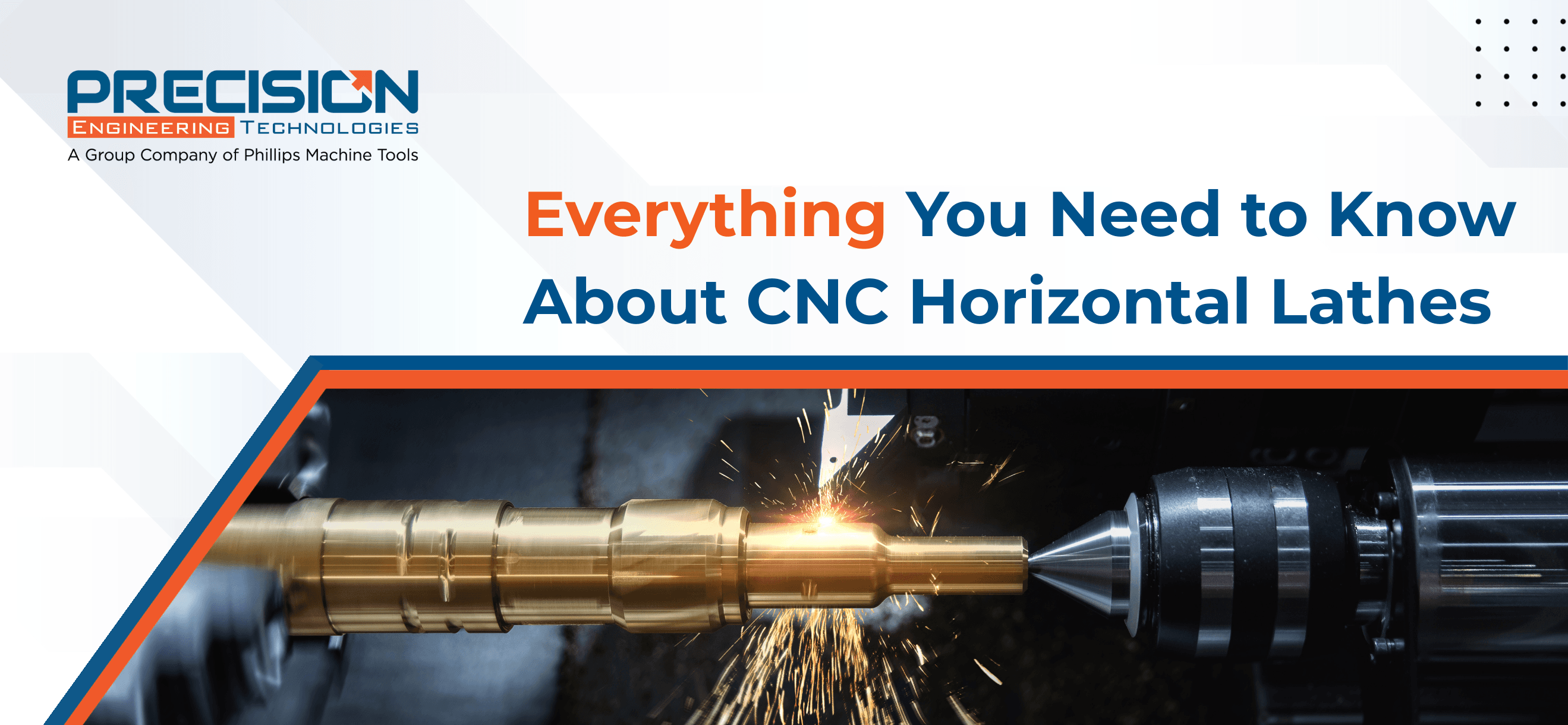
The CNC Horizontal Lathe is a cornerstone in achieving precision and efficiency. Known for its unmatched ability to machine cylindrical components with exceptional accuracy, this machine tool plays a vital role in diverse sectors such as automotive, aerospace, oil and gas and medical device manufacturing.
Table of Content:
This guide explores what a CNC Horizontal Lathe is, how it works, its key components, applications, advantages, maintenance best practices and emerging trends.
What is a CNC Horizontal Lathe?
A CNC Horizontal Lathe is a computer-controlled machine tool designed to perform turning operations with high accuracy and repeatability. The horizontal milling machine configuration allows the workpiece to rotate on a horizontal axis while cutting tools shape it along defined coordinates.
The integration of CNC (Computer Numerical Control) technology enables operators to automate complex machining tasks, ensuring precision, consistency, and reduced manual intervention. These machines are particularly effective in handling long, slender components with tight tolerances.
How Does the CNC Horizontal Lathe Work?
In a CNC Lathe Machine, the workpiece is securely mounted in a chuck attached to a rotating spindle. Cutting tools mounted on a turret approach the rotating workpiece along designated axes to remove material and achieve the desired shape.
The movement of both the workpiece and tools is controlled by pre-programmed G-code instructions. These control spindle speed, feed rate, and tool path, allowing for consistent, repeatable machining of complex geometries.
What are the Main Parts of a CNC Horizontal Lathe?
Understanding the main parts of a CNC Horizontal Lathe is key to leveraging its full potential:
● Chuck: Holds the workpiece securely. It can be manual, hydraulic, or pneumatic, depending on the requirements.
● Spindle: Provides the rotational motion to the workpiece and is driven by a motor housed in the headstock.
● Tool Turret: A rotating disc that holds multiple tools. It indexes to the required tool for specific operations.
● Bed and Carriage: The bed supports the carriage and provides rigidity. The carriage moves along the bed to carry out the cutting operations.
● Tailstock: Provides support to the free end of the workpiece, especially when machining long components.
● Coolant System: Delivers coolant to the cutting zone to manage heat and prolong tool life.
● Control Panel: The operator interface for entering, monitoring and adjusting machining parameters.
Advantages of CNC Horizontal Lathes
Investing in a CNC Horizontal Lathe delivers several distinct advantages:
● Precision and Consistency: Ensures tight tolerances, even across long production runs.
● Higher Efficiency: Reduces manual processes, lowers cycle time and increases throughput.
● Versatility: Supports multiple operations, such as turning, facing, threading, and boring, on a single setup.
● Cost Efficiency: Reduces labor requirements and material wastage.
● Safety: Enclosed machining environments and automated features protect operators from direct contact.
CNC Horizontal Lathe Applications Across Industries
The widespread capabilities of these machines make them essential in various industries:
● Automotive: For producing shafts, pistons, brake discs and transmission components.
● Aerospace: Used for turbine shafts, jet engine parts and structural fasteners.
● Oil and Gas: Ideal for valves, collars, pump components and pipelines.
● Medical Devices: Manufacturing of surgical instruments and orthopedic implants.
● Electronics: Production of housings, connector pins and precision spacers.
How to Select the Right CNC Horizontal Lathe
Selecting the right machine depends on several factors:
● Workpiece Size: Choose a lathe with a swing diameter and bed length that match your largest components.
● Material Type: Heavier materials may require machines with more torque and rigid construction.
● Production Volume: For high-volume manufacturing, priorities automation features like bar feeders and tool changers.
● Control System: Ensure compatibility with your existing software and integration needs.
Maintenance and Safety Tips
Effective maintenance ensures longevity and optimal performance:
● Routine Inspection: Regularly check for wear on spindle bearings, tool holders and the guideways.
● Lubrication: Maintain oil and grease levels as per manufacturer guidelines.
● Cleanliness: Remove swarf, oil residue and coolant from the bed and turret after each cycle.
● Emergency Readiness: Keep emergency stops and limit switches functional and accessible.
● Operator Training: Ensure all operators are trained in safe operation, programming and emergency response.
Common Challenges and How to Overcome Them
Like any machine tool, CNC Horizontal Lathes can encounter issues. Here’s how to manage them:
● Tool Wear: Monitor tool life and implement timely replacements.
● Chip Accumulation: Use chip conveyors or regular cleaning schedules to avoid clogging.
● Vibration: Use dampers and ensure the machine is mounted on a stable surface.
● Thermal Deformation: Incorporate coolant systems and temperature monitoring for dimensional stability.
Future Trends in CNC Horizontal Turning
The evolution of smart manufacturing is driving innovation in horizontal turning technology:
● IoT Integration: Real-time data analytics for predictive maintenance and production optimization.
● AI-Powered Programming: Adaptive feed rate and tool path adjustment based on real-time inputs.
● Hybrid Machines: Integration of turning and milling capabilities in one machine for advanced geometries.
● Remote Monitoring: Operators can now track machine status and diagnostics remotely via cloud platforms.
Conclusion
The CNC Horizontal Lathe is a vital asset for precision-driven industries. It delivers high accuracy, efficiency and adaptability, meeting the demands of both mass production and custom manufacturing.
From machining complex aerospace components to automotive shafts, understanding the main parts of a CNC Horizontal Lathe, its operational benefits and its diverse CNC Horizontal Lathe applications allows you to fully leverage its potential.
At PETECH, we provide best-in-class horizontal turning solutions, backed by industry expertise and after-sales support.
Ready to enhance your production line? Contact us today to explore how our CNC Horizontal Lathes can empower your business.