How CNC Turning Powers Automotive Industry Production
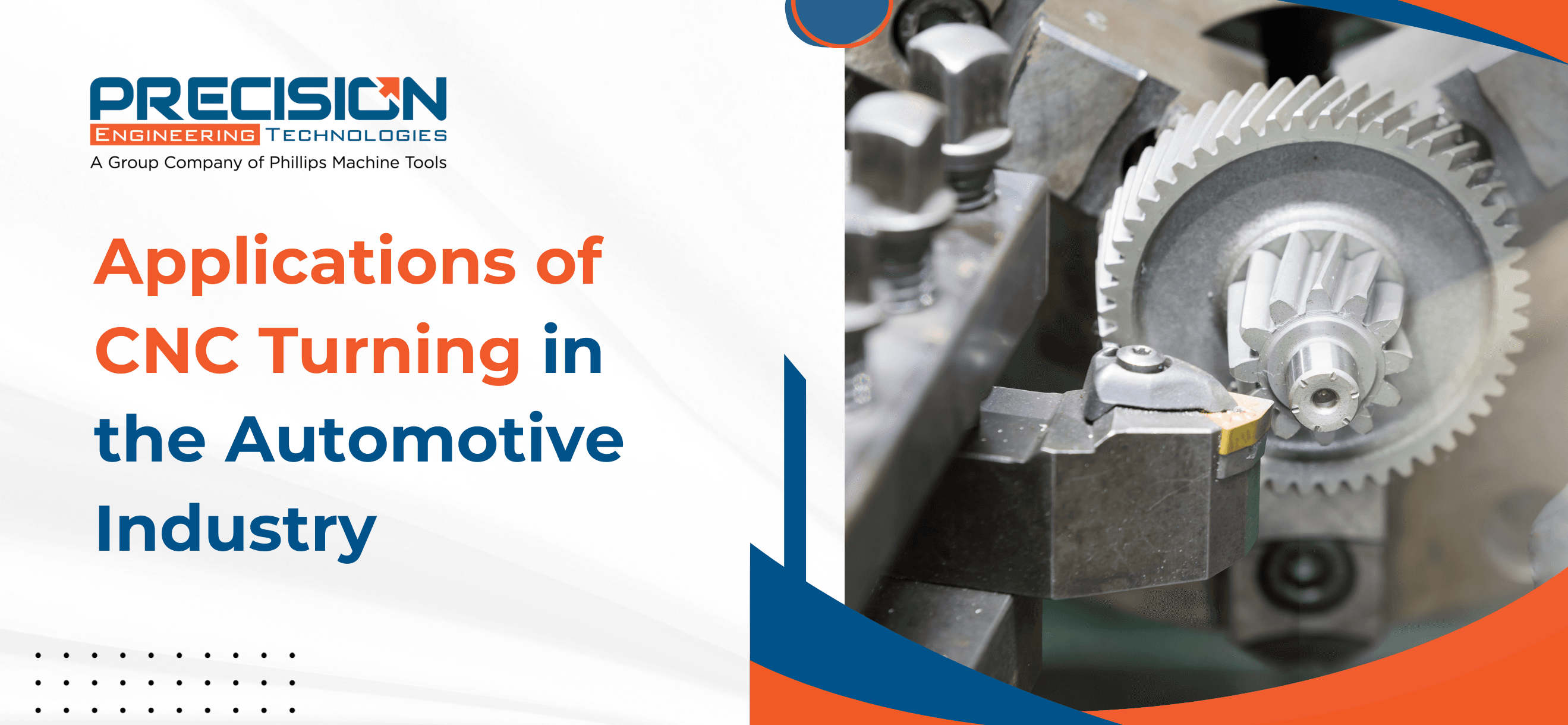
As production demands growth and tolerance tighten, CNC turning has emerged as a foundational technology enabling the rapid, consistent production of complex automotive components. From powertrain assemblies to safety-critical braking systems, CNC turning in automotive operations ensures parts meet rigorous standards for performance, precision, safety and scalability.
Table of Content:
What is CNC Turning Technology?
CNC turning is a subtractive machining process where material is removed from a rotating workpiece using a stationary cutting tool. The process is governed by pre-programmed instructions known as G-code, ensuring precision across multiple axes of motion. The workpiece is typically mounted on a high-speed spindle and shaped into cylindrical or symmetrical parts.
This method is ideal for producing parts such as shafts, rods, bushings, hubs, and other round components from metals, plastics, and composites. CNC turning machines vary from basic 2-axis setups to advanced multi-axis turning centers capable of simultaneous cutting operations and automated tool changes.
Why CNC Turning Is Vital in Automotive Manufacturing
In a sector where even microscopic deviations can impact safety, fuel efficiency or handling, CNC turning in automotive production delivers:
- Tight tolerances and repeatability
- Scalability from prototypes to high-volume runs
- Rapid adaptability to design changes
- Material versatility across metal and polymer components
- Minimal post-processing needs
Whether manufacturing components for traditional combustion engines or electric vehicles, CNC turning ensures process consistency while meeting the automotive industry’s rigorous standards.
Key Advantages of CNC Turning in Automotive Manufacturing
High Precision and Consistency
Modern CNC turning machines achieve dimensional tolerances as fine as ±0.0025 mm. This level of accuracy is essential for:
- Pistons and cylinders where combustion efficiency depends on perfect sealing
- Transmission shafts that demand uniformity for smooth gear transitions
- Brake system parts that must meet stringent regulatory and safety standards
Precision also improves interchangeability, which is crucial for mass production and assembly line efficiency.
Enhanced Production Efficiency
By automating tool paths and eliminating manual intervention, CNC turning shortens production cycles. High-speed spindles, multi-tool turrets, and real-time monitoring systems allow for:
- Continuous operation (24/7 machining)
- Shorter lead times for batch runs
- Fewer errors and reduced rework rates
This efficiency is a cornerstone of lean manufacturing in the automotive industry.
Material Versatility
CNC turning machines can handle a variety of automotive materials, including:
- Aluminum and magnesium: Popular for lightweight EV and internal combustion components
- Tool steels and carbon steel: Used for high-load structural parts
- Plastics and polymers: Ideal for insulators, bushings, and internal fasteners
- Exotic alloys like Inconel: Chosen for heat resistance and durability in extreme conditions
This versatility makes CNC turning a go-to process across various departments—from powertrain to interior trim manufacturing.
Flexibility and Rapid Prototyping
Automotive manufacturers are increasingly working across multiple platforms and model variants. CNC turning in automotive manufacturing enables:
- Fast changeovers via digital programming
- Quick iteration cycles for R&D and prototype testing
- Adaptability to custom designs and short production runs
This flexibility reduces downtime and helps manufacturers stay agile in a competitive market.
Integration with Smart Manufacturing
CNC turning now integrates seamlessly with automation systems, enabling real-time quality checks, tool wear monitoring, and predictive maintenance. These smart systems improve machine uptime and throughput by:
- Sending alerts before equipment failure
- Automatically adjusting feed rates and cutting speeds
- Reducing waste and improving energy efficiency
Such digital integration aligns with Industry 4.0 principles and allows manufacturers to make data-driven decisions.
Core Applications of CNC Turning in the Automotive Industry
Engine Components
CNC turning in automotive engine manufacturing helps create:
- Crankshafts and camshafts: High-precision turning ensures timing accuracy and rotational balance.
- Pistons and cylinder sleeves: Roundness and surface finish are vital for combustion efficiency and fuel economy.
- Valve guides and seats: Tight tolerances maintain airflow, fuel injection timing and exhaust efficiency.
Transmission and Drivetrain Parts
Power delivery in vehicles requires flawlessly machined parts:
- Gear shafts and synchronizer rings: CNC turning ensures correct pitch and alignment.
- Axles and differential housings: Machined for durability, fit and load-bearing capacity.
Such components must function flawlessly under continuous torque and vibration stress, which CNC turning accommodates through high repeatability.
Suspension and Steering Components
Precision parts in suspension and steering systems include:
- Tie rods, control arms and ball joints: Turned components that must handle high-impact forces and angular motion.
- Shock absorber pistons: Require exceptional roundness and surface finish to provide consistent ride comfort.
Poor machining in these parts can directly compromise vehicle handling and safety.
Brake System Components
Brake systems are non-negotiable when it comes to precision:
- Brake drums and rotors: Must maintain balance and parallelism to avoid vibrations and ensure effective stopping.
- Caliper pistons: Machined to exact dimensions for reliable hydraulic performance.
CNC turning ensures surface finish and tolerances that contribute to long-lasting, safe braking mechanisms.
Evolving Applications in Electric and Hybrid Vehicles
The shift toward electrification brings new challenges and opportunities for CNC turning:
EV-Specific Parts
- Rotor and stator shafts: High-speed turning ensures concentricity for motor efficiency.
- Battery tray mounts and enclosures: Require lightweight but rigid structural components.
- Cooling system parts: Turned for accurate fit and smooth fluid flow.
Lightweight Component Machining
Aluminum and magnesium components, widely used to reduce EV weight, are ideal for CNC turning with:
- Advanced carbide or diamond tooling
- High-RPM spindles to reduce chatter
- Adaptive toolpaths for complex geometries
CNC turning ensures weight savings without compromising structural integrity.
Future Trends in CNC Turning for Automotive
- Multi-axis machining: Allows more complex parts to be made in one setup.
- Live tooling: Combines turning with milling, drilling and tapping operations on a single machine.
- Digital twin simulations: Reduce prototyping time by virtually validating tool paths and operations.
- Cloud-integrated CNC systems: Improve remote diagnostics, performance tracking and inventory control.
These developments promise increased automation, greater efficiency and superior quality control across manufacturing lines.
Conclusion
CNC turning has firmly established itself as a critical technology in the automotive sector, delivering unmatched precision, efficiency and adaptability. From traditional internal combustion systems to cutting-edge EV designs, CNC turning in automotive manufacturing is the backbone of producing safe, high-performance components at scale.
At PETECH, we provide advanced CNC turning solutions tailored to the evolving needs of the automotive industry. Our end-to-end machining capabilities, automation integrations, and commitment to innovation ensure that our clients are always a step ahead, no matter the complexity or volume.
To explore how our CNC capabilities can power your next production phase, get in touch with the PETECH team today.